

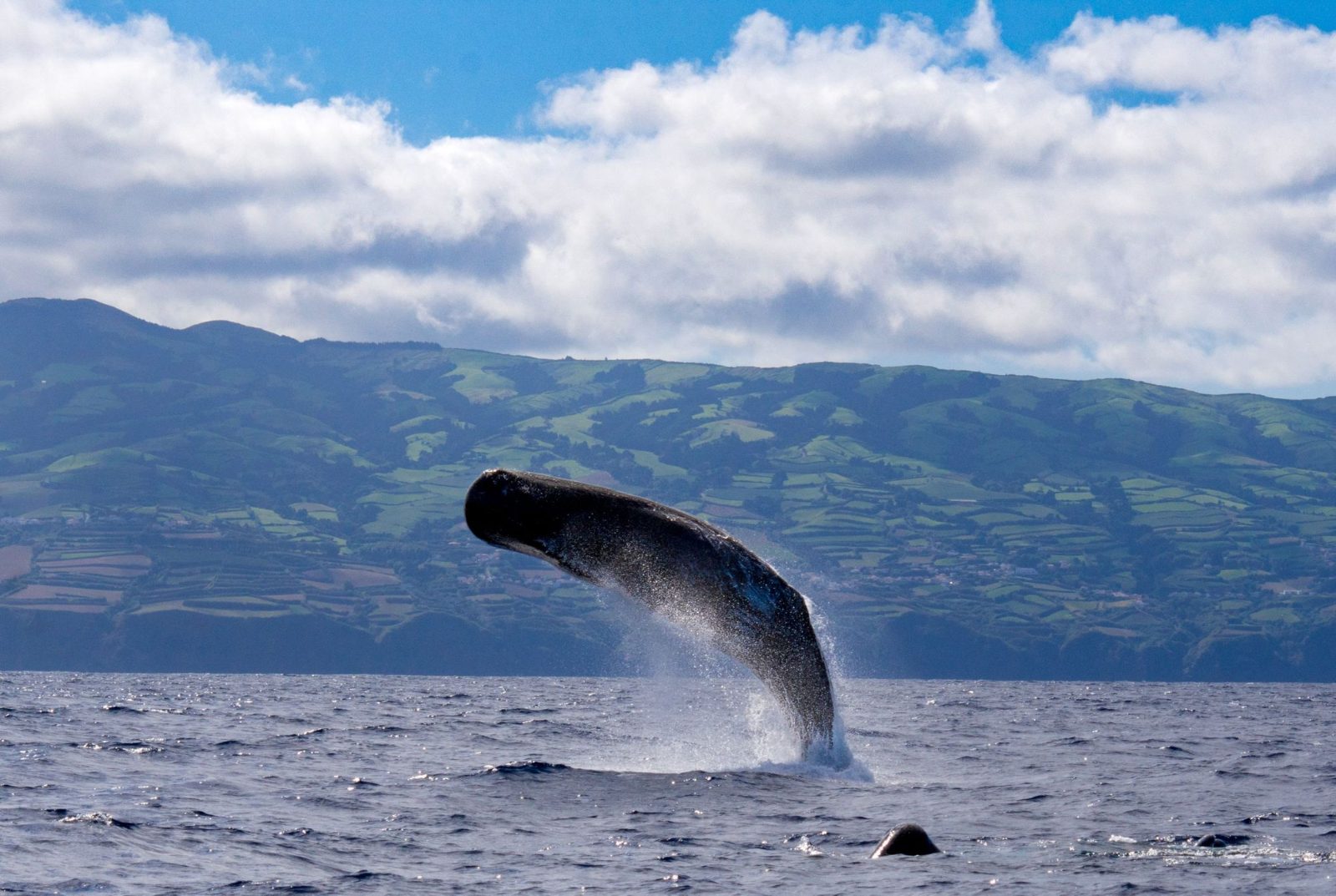
Quick answer
The main season runs roughly from April to October, when resident sperm whales and dolphins are joined by migrating blue, fin and sei whales. Spring, from April to June, is the strongest window for the giant baleen species; summer brings calmer seas and reliable dolphin sightings. Boats depart from Marina Portas do Mar, with the base open daily and free to enter.
The waters off São Miguel host more than twenty cetacean species, roughly a third of all whales and dolphins known to science. That density is the reason the ponta delgada whale watching season draws travellers from across the Atlantic each year, and it explains why the calendar matters so much. Sightings are not evenly spread; different animals pass through Azorean waters at different points in the year. Resident sperm whales and several dolphin communities stay year-round, which means departures from Marina Portas do Mar rarely leave the harbour without a target. The migratory giants are another story. Blue whales, fin whales and sei whales move north along the mid-Atlantic ridge in spring, feeding as they go, and their passage is what turns an ordinary outing into something rarer. Understanding this rhythm helps a visitor read the season rather than gamble on it. Weather shapes the experience as much as biology. The Azorean Atlantic can turn quickly, so calmer mornings tend to deliver steadier boats and cleaner sightlines. Many operators still work with vigias, the land-based lookouts perched on the cliffs who once guided the whaling fleet and now scan the horizon for spouts, radioing coordinates to the skippers below. It is a piece of local heritage that quietly improves modern success rates. For anyone weighing when to travel, the São Miguel whale watching calendar rewards a little planning. Spring favours the baleen migration; summer brings warm, settled days and strong dolphin activity; autumn holds steady before the swell builds. This azores whale watching guide is best used alongside the dedicated sections on this page, which break down month-by-month odds, arrival timing and what to pack. The prose here frames the choice; the tables sharpen it. Practical footing matters too. Tours leave from the marina in central Ponta Delgada, entry to the operator's base is free, and the individual excursions are priced separately through the booking pages. A visitor who lands with a rough plan — a target species, a preferred month, a morning slot — will get far more from the ponta delgada whale watching season than one who arrives hoping for luck. The animals are wild and nothing is guaranteed, but the odds are readable, and reading them well is most of the work.
“The animals are wild and nothing is guaranteed, but the odds are readable, and reading them well is most of the work.”
Selecting the Best Ponta Delgada Whale Watching Season
The optimal period for whale watching in Ponta Delgada is from April to October, with April and May offering the greatest variety of cetaceans. During this spring migratory window, baleen giants pass through Azorean waters alongside resident dolphin and sperm whale species.
Spring (March to May)
Moderate traveler trafficCool, variable 14°C to 18°C
This season brings migrating baleen giants like blue, fin, and sei whales feeding on plankton. Resident sperm whales and dolphin species remain active in the area.
Summer (June to September)
Peak seasonal crowdsWarm, drier 19°C to 23°C
Ideal for spotting resident sperm whales and seasonal Atlantic spotted dolphins. Warmer air temperatures provide the most comfortable ocean crossings.
Morning departures
Standard tour sizes—
Departing between 08:30 and 11:30 offers the calmest sea states and optimal lighting. Wind and swell levels frequently increase in the afternoon hours.
Verdict: For the highest species diversity and calmest waters, book a morning departure between 08:30 and 11:30, Tuesday to Thursday, from mid-April to late May.
Spring vs Summer: Comparing the Ponta Delgada Whale Watching Season
When planning a whale watching departure from the Portas do Mar marina in Ponta Delgada, travelers face a choice between the migratory giants of the spring season and the stable, warmer waters of summer. This choice directly dictates the specific cetacean species you will encounter, the typical weather patterns at sea, and how far in advance you must book.
|
Top pick Spring (March to May) Migratory Giants |
Summer (June to September) Warmer Waters & Dolphins | |
|---|---|---|
| Primary Species | Migrating blue, fin, and sei whales passing through, alongside resident sperm whales and common dolphins. | Resident sperm whales, seasonal Atlantic spotted dolphins, plus bottlenose and Risso's dolphins. |
| Sea Conditions | Variable Atlantic weather with active swells and a higher likelihood of wind-related tour cancellations. | Generally calm seas with excellent visibility and a lower rate of weather-related cancellations. |
| Average Air Temp | 14°C to 18°C (57°F to 64°F) | 19°C to 24°C (66°F to 75°F) |
| Crowd Levels | Moderate at the marina, allowing for flexible last-minute rescheduling if conditions shift. | High peak season crowds, requiring travelers to book departures at least two months ahead. |
| Key Advantage | The specific window to see giant baleen whales during their northern migration. | More reliable departure schedules, warmer air, and large pods containing newborn dolphin calves. |
Verdict: Choose the spring season if your primary goal is to search for massive migratory baleen whales and you have a flexible travel schedule, but opt for the summer months if you prioritize warmer temperatures, calmer ocean conditions, and spotting large dolphin pods.
Expert Tips for Planning Your Ponta Delgada Whale Watching Season
Planning your whale watching excursion in Ponta Delgada requires choosing the right vessel and accounting for the highly unpredictable Atlantic weather.
Book on Your First Day
Schedule your trip for the beginning of your stay in São Miguel. If rough seas trigger a postponement, this buffer allows operators to reschedule you for a later day without missing the opportunity.
Choose Zodiacs for Close Encounters
Rigid inflatable boats sit just centimeters above the water, providing low-angle views ideal for photography. Select these if you are prepared for a bumpy, wet ride and do not have back issues.
Opt for Catamarans for Comfort
Catamarans offer stable viewing decks, indoor cabins, and toilet facilities. This is the suitable choice if you are traveling with young children, seniors, or are prone to motion sickness.
Check the Postponement Refund Policy
Confirm the operator's weather cancellation policy at Marina Portas do Mar, Av. Infante Dom Henrique, Loja 26. Reputable agencies offer a full refund or free rescheduling if sea conditions prevent departures.
Arrive During the Best Window
Plan your check-in between 08:30–11:30. Morning departures typically experience calmer sea conditions and better visibility.
Contact the Office for Updates
Call +351296559385 or visit the shop early to verify if the morning tour is running. Wind and swell directions change quickly, meaning departures can be delayed or adjusted on short notice.
Verify Availability Online
Check the official site at https://www.futurismo.pt for tour availability and scheduled departure updates. Individual whale watching tours are priced separately, though entry to the marina is 0 EUR.
Debunking Myths About the Ponta Delgada Whale Watching Season
Misconceptions about the marine environment in São Miguel often lead to mismatched expectations regarding species availability and weather. Clarifying these common myths helps travelers understand what to expect when planning their excursions.
MythBlue whales reside in Ponta Delgada year-round.
FactBlue whales are migratory baleen whales and typically only pass through the waters around São Miguel during their spring migration, primarily from March through June, rather than staying permanently.
MythClear, sunny skies on land guarantee calm sea conditions for tours.
FactOcean swells and offshore wind speeds determine sea state and boat comfort, which often differ significantly from the warm, calm weather observed on land in Ponta Delgada.
MythOperators use sonar to locate whales in the water.
FactLocal lookouts, known as vigias, spot whales from coastal towers using binoculars, intentionally avoiding sonar which can cause acoustic stress and disrupt marine mammal communication.
MythWhale watching is only possible during the summer months.
FactResident species like sperm whales and several dolphin species inhabit the waters around São Miguel all year, allowing operators to run tours in any season when weather permits.
Marina Hours and Best Daily Departure Windows
The main harbor office at Marina Portas do Mar operates daily from 08:00 to 18:00.
| Monday | 08:00–18:00 | Morning departures recommended |
|---|---|---|
| Tuesday | 08:00–18:00 | Morning departures recommended |
| Wednesday | 08:00–18:00 | Morning departures recommended |
| Thursday | 08:00–18:00 | Morning departures recommended |
| Friday | 08:00–18:00 | Morning departures recommended |
| Saturday | 08:00–18:00 | Morning departures recommended |
| Sunday | 08:00–18:00 | Morning departures recommended |
How to Get to Your Tour Departure Point in Ponta Delgada
The tour office at Marina Portas do Mar is situated on the main harborfront of Ponta Delgada, making it easily accessible on foot from anywhere in the historic city center.
Walk east from Portas da Cidade along the Avenida Infante Dom Henrique promenade to Loja 26
Direct ride from João Paulo II Airport (PDL) to the Marina Portas do Mar waterfront drop-off point
ANC Aerobus from João Paulo II Airport (PDL) to the Avenida Infante Dom Henrique marina stop
PDL MiniBus Line A or Line B from the city center to the dedicated Portas do Mar stop
Essential Packing Checklist for an Azores Whale Tour
Pack for an offshore boat that sits in open Atlantic water, where wind and spray matter more than land weather.
-
Confirm your booking in advance — Reserve your tour slot online before arriving so a spot is held for you.
-
Take motion-sickness precautions — Take remedies the night before or morning of, as open-water swell affects many riders.
-
Pack a water-resistant windbreaker — Wind and sea spray offshore feel colder than conditions on the marina.
-
Wear flat non-slip shoes — Wet decks get slippery, and grip keeps you steady when the boat moves.
-
Bring sun protection — Apply sunscreen and pack a hat and sunglasses, since glare off the water is strong.
-
Add a warm mid-layer — Temperatures drop once the boat picks up speed away from shore.
-
Carry water and light snacks — Steady hydration and small bites help settle your stomach during longer departures.
Check availability
Frequently asked questions about ponta delgada whale watching season
Everything you need to know about ponta delgada whale watching season